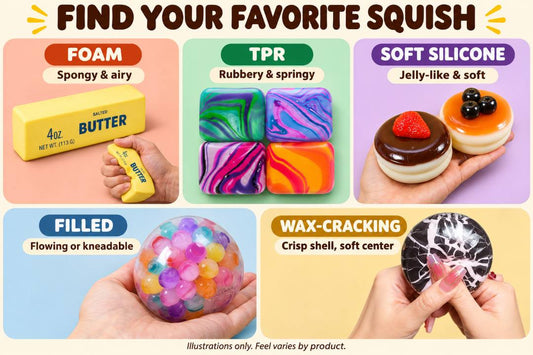


Rinse washable silicone squishies with water, adding a little mild soap when needed. Clean foam squishies with a barely damp cloth. Let both dry completely before storing them. Avoid rubbing alcohol unless the manufacturer approves it for your toy, especially if it has paint, a coating, or a fuzzy finish.
| Squishy Type | How to Clean | What to Avoid |
|---|---|---|
| Washable silicone | Rinse with water; use a little mild soap for dirt or hand oils | Rough scrubbing and pulling thin details |
| PU foam | Gently wipe with a barely damp cloth | Soaking, twisting, and wringing |
| Fuzzy, coated, or filled toys | Follow the product’s cleaning instructions | Assuming every soft toy can be washed |
How to Clean Silicone Squishy Toys
For washable silicone squishies without special surface finishes, you need water, a little mild liquid soap, and a clean place to air-dry them.
-
Rinse off loose dirt. Use cool or lukewarm water. Gently run your fingertips over the surface to loosen dust and lint.
-
Use a little soap if needed. Gently rub dirty areas with your fingers. Support thin ears, leaves, or other details so you do not stretch them while washing.
-
Rinse away the soap. Work water into grooves and folds until no suds or residue remain.
-
Let it air-dry. Place the toy on a clean surface away from heat and direct sunlight. Turn it over if moisture remains underneath.
For example, Crelloci’s Apple Squishy can be rinsed with water, with detergent added when needed and thoroughly washed away afterward.
If your silicone squishy feels naturally tacky, avoid rubbing it dry with tissues or fluffy towels; fibers can stick to the surface. Fuzzy finishes and attached decorations need their own care instructions, even when the toy underneath is silicone.
How to Clean Foam Squishy Toys
Use a barely damp cloth to clean the surface. Foam can retain water, so avoid soaking it or holding it under a running tap.
-
Dampen a soft cloth. Wring it out until it no longer drips.
-
Wipe gently. Dab dirty spots and use light strokes over painted areas. Stop if color starts coming off.
-
Remove stubborn dirt carefully. If the care instructions allow soap, add a little mild soap to the cloth. Follow with a separate cloth dampened with clean water to remove residue.
-
Air-dry completely. Leave the toy in a ventilated spot before playing with it or putting it away.
Do not scrub with a brush or twist the toy to squeeze water out. Both can strain the foam and its surface finish.
If you accidentally get a foam squishy very wet, gently blot away surface moisture and leave it exposed to air. Drying time varies with its size and how much water entered the foam. A dry surface does not always mean the inside has dried.
Can You Clean Squishies with Rubbing Alcohol?
Skip rubbing alcohol for everyday cleaning unless the manufacturer specifically permits it. This includes alcohol wipes and alcohol-based hand sanitizer.
Some silicone materials resist isopropyl alcohol, but that does not establish whether a finished squishy’s paint, coating, adhesive, or particular formulation will tolerate it.
Keep Your Squishy Clean Between Uses
Wash your hands before playing, and clean visible dirt after drops or messy use. Once the toy is fully dry, store it in a clean container or suitable storage bag.
Never microwave a squishy or use a heater or hot hair dryer to speed up drying. Stop using toys that leak, shed pieces, or have a peeling surface. More washing will not repair damaged material.
For routine care, keep it simple: rinse washable silicone, gently wipe foam, and let everything dry before storage. Follow separate instructions for special finishes, and avoid stronger cleaners when water and a little mild soap will do.
Tags: